The Impact Of Having A Good Mentor

Having someone that you can look up to and go to for support is one the most important things a kid can have. Mentors give youth (and even adults) the confidence they need to confront challenges and come up with their own solutions. They provide a safe place for kids and teens to be themselves and have fun, while also learning valuable life skills.  

A great mentor has many traits— they can be a role model, cheerleader, policy enforcer, advocate, and friend to the students they work with. First Tee mentors have a sincere desire to be involved with their students, and treat them with respect. They practice active listening skills and empathy, while also seeking solutions and opportunities for those they work with. 

We celebrate each of our coaches, and recognize them for the unique role they play in young lives. In fact, research shows that First Tee participants think of their coaches as more than just teachers and counselors, but real mentors who have made a positive difference in their lives. 

Here are four ways a mentor impacts their mentees that were inspired and created by what our junior golfers have to say about their coaches:

1. Mentors show that you can never stop learning

They are always growing and showcasing that to their mentees who can feel inspired by how they adapt to life’s challenges.

“I constantly heard that sport emulates life, and life emulates sports. I didn’t understand this concept until I started the First Tee program. Through this sport, I learned accountability and responsibility for my actions and how to respond to adversity.  These lessons have affected my thinking about the impact I have on those around me and how important it is for me to strive to be my best self.”  – Quincy Crawford, participant, 2021 Scholar

2. Mentors help inspire students to be game-changers

Not just for themselves, but in their everyday lives and especially with their peers.

“Having an amazing mentor through the First Tee who I have developed a strong relationship with has inspired me to help others find mentors that can help them through their education and career.”Remi Shendell, participant, First Tee Scholar

3. Mentors teach the importance of active listening

Not only do they offer support, but they show how valuable it can be to listen to someone in both good and bad times.

“Coach Mary Beth McGirr has been a major influence in my life, helping me with golf and with learning critical life skills that will aid me throughout my life. She took me under her wing and has been a shining example for me to follow. Additionally, as a woman, she has been an amazing mentor and example of a strong, confident female for me to look up to and admire. Coach Mary Beth has been one of my biggest fans and encourages me to do my best. She takes time to talk about my golf, life, family and personal struggles. She has been an excellent example of a strong leader and businesswoman who consistently gives back to the game and the community.” –  Alyssa Caraballo, The First Tee of Roanoke Valley

4. Mentors guide students to lead by example

It’s easy to tell someone what to do, but more impactful to give students the tools and examples they need to come to their own solutions.

“Coach Donnie Caldwell, PGA has given me great advice with my golf but more importantly, in my life. He has told me ‘make choices today that you’ll be proud of tomorrow.’ I used to just make choices that seemed the easiest or most convenient. But now I take time to think about those big decisions and how my choices may also affect others. Without him and his advice, I don’t know where I would be with my life, and that’s scary. He has made me a better person and he has shown me how to make the most of my life.” – Braxton Caldwell, First Tee of Pine Mountain

As you can see, the impact of a great mentor is one of our strongest tools in life. Our mentors work to guarantee students that there is someone who cares about them and who will assure them they are not alone in dealing with challenges. Offered at more than 1,200 locations, our program was developed by experts in the field of positive youth development and is delivered by trained coaches, or as our participants say— mentors! 

Check with your local chapter about how you can become a mentor to a junior golfer in your community.

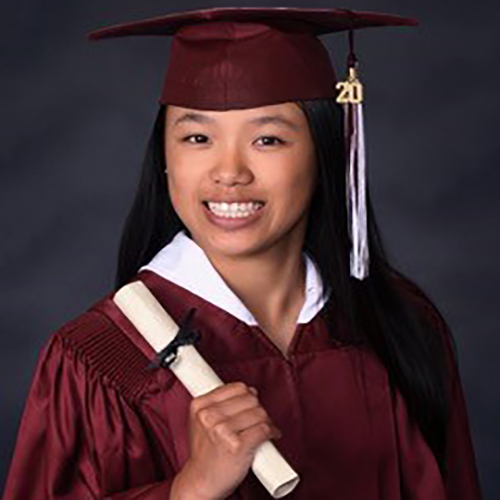
Quick 9: Denise W

Mentoring

Denise W, First Tee – San Francisco 

1. Why is mentorship important?

It’s easy to get lost and overwhelmed, especially since we now live in an extremely fast-paced world where expectations for us are very high, so having a mentor to guide us through our development process is definitely reassuring.

2. What makes someone a good mentor?

Listening and being able to communicate effectively are qualities that make someone a good mentor. With such qualities, a mentor will be able to offer constructive feedback which will aid in a mentee’s future development.

3. Who has been an impactful mentor to you?

My mom has definitely been the most impactful mentor for me.

4. What have you learned from her/him?

From my mom, I learned that no matter what the circumstances are, hard work pays off. My mom immigrated to the U.S. in hopes to find better future prospects for the family and despite not knowing any English, she still continued to work hard in the U.S. to achieve her goals. In the end, all of her hard work and efforts paid off because she was able to provide the basic necessities for our family and grant my siblings and I access to a higher education.

5. How did/does your mentor help encourage you?

My mom always tells me, “Don’t be afraid of failure. Just go for it!” These are words that I will always remember because they encourage me to try new things, even if I don’t necessarily succeed. It’s a way of telling me that failure is a learning experience and if I fail, I can keep trying.

6. Have you grown as a result of your mentor?

Yes, I have grown as a result of my mom. Her guidance has helped me become more disciplined and more open to new experiences and opportunities. Without her, I don’t think I would be the person I am today.

7. What would it mean to you to become a mentor? Or Do you serve as a mentor at your chapter or any other capacity?

For me, being a mentor is very meaningful and fulfilling because not only am I able to help others, I am also able to develop myself further as a leader.

8. Do you have any advice on how to choose the best mentor in your life?

Find someone who cares about you and is willing to take the time out of their busy day to listen to your needs and help you.

9. What has First Tee taught you about mentorship?

First Tee has taught me that both the mentor and mentee are learners. Both rely on each other as a resource for new perspectives and knowledge. It’s not a one way relationship where only the mentor is helping the mentee.

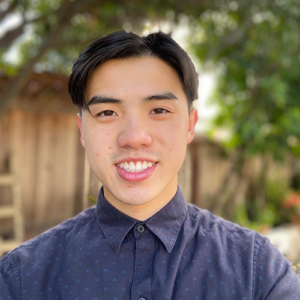
Quick 9: Ricky L.

Mentoring

Ricky L., First Tee – Tri Valley

1. Why is mentorship important?

Mentorship is important because it allows a chain of knowledge and wisdom from years of experience from mentors to be passed down to mentees, unlocking their potential. Mentorship gives underprivileged students guidance to take control of their own life.

2. What makes someone a good mentor?

A great mentor is someone who has as much common ground with the mentee as possible, such as similar circumstances, college, passions, and career trajectory. More importantly, a great mentor actively listens to the mentee, providing insightful feedback, advice, or opportunities in return.

3. Who has been an impactful mentor to you?

The mentor I have been paired with from the First Tee Scholarship, Jim Smith from Morgan Stanley, has been an amazing mentor, a key guide through all my academic, career, and spiritual difficulties.

4. What have you learned from her/him?

Through our monthly discussions together over the past year, Mr. Smith has given me an abundance of wisdom from his years of experience in becoming a Senior Wealth Portfolio Manager. Also, his advice has helped me get past my choice paralysis in deciding career pathways and majors in college.

5. How did/does your mentor help encourage you?

When I hear about Mr. Smith’s stories of his journey in finding, developing, and maintaining both a loyal client basis and talented team through ups and downs, I am inspired. Additionally, Mr. Smith provides so many life tools, advice, and books/video recommendations to help me stay on a healthy path and achieve career goals.

6. Have you grown as a result of your mentor?

Because of Mr. Smith, I have learned to prioritize my different goals and face my reality with a clear mind. Although remaining open to life, I truly want to serve the world, my community, and my family while also pursuing my passions in computer science, finance, and fitness.

7. What would it mean to you to become a mentor? Or Do you serve as a mentor at your chapter or any other capacity?

Being a mentor to someone is a true honor to me because I can impact someone’s life so personally. I am in Harvard’s Chinese Student Association, and as a sophomore, I am a mentor to freshmen paired with me. Although it can be worrying wondering if you are providing value to your mentees, remember that simply listening and sharing your experience can help them out.

8. Do you have any advice on how to choose the best mentor in your life?

Be open to all mentors, even if they may not align with you in certain aspects such as passions, hobbies, career path, or academic major. Hearing a different perspective may change your mind and open new pathways that you may have not considered. Listen to what your mentor truly has to say and keep asking questions.

9. What has First Tee taught you about mentorship?

First Tee has taught me that mentorship comes from a genuine care to better the world and your community, and that most often, mentees become mentors to future generations. Mentorship keeps the spirit of the First Tee alive as older students come back to volunteer their time to help their chapters.

Looking Back on the First Tee Leadership Summit

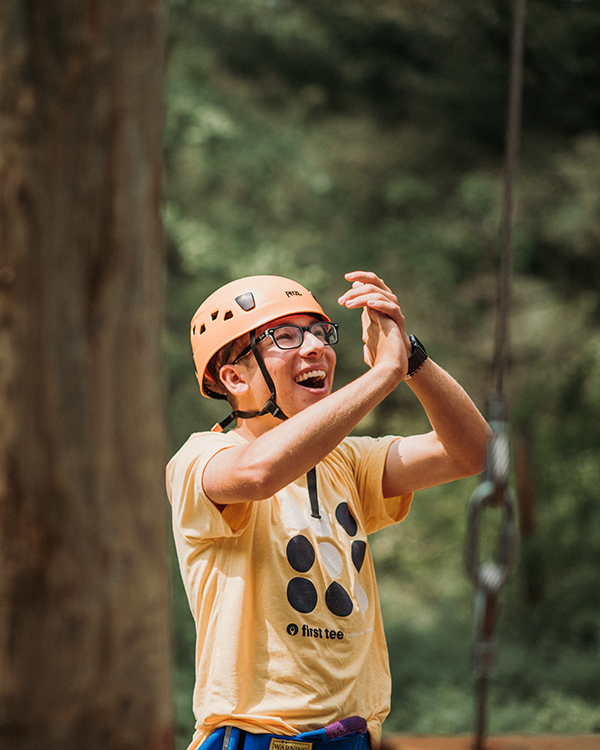
This August, we held our first ever First Tee Leadership Summit in the unforgettable backdrop of West Creek Ranch in Montana. This event took place for two weeks, bringing together 20 teens each week from across the country to develop leadership skills through dynamic outdoor and team-building activities. Through collaborative workshops, First Tee’s core competencies of building character, self-confidence and resilience played a huge part of the experience, to explore the concepts of relationship building, positive risk taking, and character evaluation. We recently caught up with participant Benjamin Parris from First Tee – Denver to hear how this year’s event impacted him.

Benjamin Parris, First Tee – Denver

In Denver, I often hear the amazing experiences fellow participants have when they return from First Tee national events. Until the first week of August 2021, I had never experienced one for myself and I was not quite sure what to expect when I was selected for The First Tee Leadership Summit in Partnership with the PGA TOUR Superstore at Mr. Arthur M. Blank’s West Creek Ranch in Montana. As soon as I arrived at the airport, I knew it would be a special week as I was immediately greeted by fellow participants and alumni chaperones. When we arrived at West Creek, even more participants were eager to greet us and introduce themselves. I knew I had formed relationships almost immediately, and those only got better as the week went on. At the summit, we got to participate in activities such as horseback riding, archery, white water rafting, and other spectacular outdoor experiences. Also, during our days, we had the opportunities to listen to guest speakers like Dick Sullivan (CEO of the PGA TOUR Superstore), Ralph Stokes (the PGA TOUR Superstore’s Director of Partnership Marketing and former University of Alabama running back), Joe Shepard (a PGA TOUR Superstore Regional Manager), Stacie Monks (a PGA TOUR Superstore District Manager), and our keynote speaker Michael Vick (former NFL quarterback). We learned lessons in values, teamwork, skill sets, representation, and more. Each day at the summit had a different theme. Our themes were: “relationships are the foundation for leadership,” “positive risk taking,” and “my character is me.” While our speakers were able to give us insightful words and stories on these themes, we learned just as much from our outdoor experiences as we did from our speakers. On Tuesday, we focused on relationships and how trust is the foundation of every successful relationship. After hearing from Dick Sullivan and Michael Vick, six participants, including myself, departed for the ropes course while everyone else elected to horseback ride. When we arrived, we immediately had to build a relationship as we picked partners to ascend on a partner climb up a 30-foot wooden ladder. My partner Sam Gibbs from the First Tee of Fort Worth deserves a quick shoutout for putting her trust in me all week from the second we became partners at the ropes course. On Wednesday, we worked on taking positive risks. My first risk of the day was waking up at 6:30 after a late night to go on a sunrise hike. Let me tell you, the views in Montana were spectacular, it was very much worth the risk of not sleeping in. Later that day I took another risk by going on a 3-hour horseback excursion, by far the longest I had ever been near another animal, besides my dog at home. My biggest takeaway from learning about positive risks were to approach people who think differently than you so you can challenge your own thinking and to seek out your own mentorships. On Thursday, our final full day at the summit, we did a lot of self-reflection while thinking about how to own our characters. Stacie Monks began the day after another gorgeous sunrise hike. She posed the following question to all the participants. “What type of leader do you want to be?” She went onto discuss how to create a culture when you are leading others and how to empower them. Later that morning we had perhaps the hardest task of the entire summit, but also to me the most impactful. We were asked to complete this phrase. “This is what I believe about myself as a leader…” This wasn’t a simple sentence to complete, and to really answer the question, it required more than just a few sentences. To complete the thought, I had to reflect upon all the things I had been through that week at West Creek. I had to think about climbing with a partner, taking leaps of faith, the inspiration I had received from our speakers and workshops, and what I had learned from all the people around me. Later that evening, we sat around the fire pit as we listened and shared all 18 of us has discovered about ourselves as leaders. My favorite part of the leadership summit was the comradery all of the participants formed. I got the opportunity to make 17 new friends, who over the course of the week felt like family. I know that I’ll be keeping in touch with them for years and years to come and can’t wait until I can see them again. For me, the week made me feel like a true member of the greater First Tee family. I had never met a fellow participant from outside of Colorado, but now I feel like I’m connected to the First Tee everywhere I go. I can’t wait to stay involved with the program as I go to college and beyond. I want to thank the First Tee, PGA TOUR Superstore and West Creek Ranch staff one final time for giving me what was truly a life changing experience. The programming was phenomenal, and the experiences were irreplicable. I came back home truly knowing what type of leader I am and how I can continue to grow as a leader. I can’t wait to apply what I learned in Montana to our local programs in Denver as well as other extracurriculars I participate in. I feel honored that I was a part of the inaugural summit.

Our Condolences to the Cline Family

We are deeply saddened to learn of the passing of Mr. Chris Cline, his daughter Kameron, and their friends.  The Cline Family Foundation has been a long time supporter of The First Tee Greater Charleston. Our thoughts and prayers go out to the Cline family and the families of all of those affected.
Participant Spotlight: Junior Course Reporters

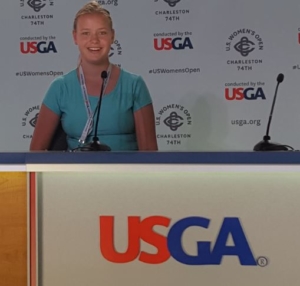
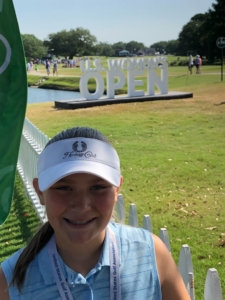
Last week, during the U.S. Women’s Open, six of The First Tee’s participants had the opportunity of a lifetime to serve as junior course reporters during championship Saturday.  Led by the USGA, they visited all media locations at the Country Club of Charleston, including the Fox television set, USGA Live set, media center, and even spent time inside the ropes at the practice facility!  Participants wrote about their experiences, and you can read about this amazing day from each perspective below:

AVERY – Advanced PLAYer level, age 11

Hi, My name is Avery and I’m from Ladson,SC  and I have been playing golf for about 9 years!  I am involved in private golf lessons, First Tee, LPGA Girls Golf, PGA Jr League, Drive Chip and Putt, and Competitive Tournaments. One day my goal is to be an LPGA player. Now, I would like to tell you about my experience today as a junior reporter!

It was a beautiful day in Charleston,SC it was 91 degrees when I got to the Country Club of Charleston. I was greeted by the Assistant Director of Marketing Kelly Grant. She was very nice and professional. She walked us all up hole #1, the first thing I saw were the plush green fairways! This is the best course I have ever been on.  Ms. Grant explained all the media stuff that was going on around the fairways, Greens, and other parts of the golf course.

Then we made our way over to the media center where we were introduced to Mr. Dave who was the Director of Media/Broadcasting for the USGA.  He explained all the jobs and all the hard work that it takes to be in the golf media department. He also explained how many engineers it takes to set up all the fiber optics around the course, and that the engineers are the most important job position. There are over 200 engineers on the course setting up for the tournament. Then he explained that they must be very careful setting up all the fiber optics due to the players safety and for the safety of the spectators also.  Lastly, while we were in the media center, I got to sit in the players conference chair where they do interviews!

Then finally, we went over to the practice driving range where we got to meet an LPGA pro-golfer, Amanda Hollandsworth! She was very polite and told us about her experience on the golf course. But what I thought was amazing, is that she only turned pro 5 DAYS AGO!  After that I asked her a few questions, I asked her who or what made her want to start playing golf, she said that her older sister played golf and always wanted to follow in her older sister’s foot steps. Then I asked her who her favorite PGA or LPGA golfer was, she said she always loved Stacy Lewis because she was a good role model to younger and older generations.  Lastly I got to take a photo with her! I hope to see her at more golf events in the future!

Finally, we went back to the junior tent, and our guide Ms. Grant gave all the juniors vouchers for free Ben & Jerry’s ice cream! I had so much fun and I would most certainly do it again!  I also recommend this to any junior who are interested!

CADE – Birdie level, age 12

My experience being a Junior Reporter at the US Women’s Open Championship was awesome! A few reasons why are: I got to have an inside look at how all the action is broadcast into homes around the world; I got to see how the reporters and announcers/analysts cover the entire golf course and report breaking news; and finally, I got to go inside the ropes at the driving range and meet pro golfer, Amanda Hollingsworth.

A golf course is a big place. Some can be up to 7,000 yards long! Covering the entire course is a massive job for reporters and camera crews.  There is a huge team of reporters, camera crew, spotters, announcers and analysts that cover the entire course which requires over 6 miles of cable.  To enhance the television viewer experience, reporters and spotters work together to track the action.  Each hole has its own spotter that sits in the tall stand. The spotters’ job is to track shots and record where golf balls land. If the ball lands in a place where the cameras could not track it, the spotter will look and find where it is and report it to the camera crew, announcers and analysts who are then able to pull it all together into the broadcast viewers see on their television.  The reporter’s job is to inform the crew of any breaking news on the course. They also interview the golfers

one-on-one after their round and during their post-round  press conference in the media center. The golf action is captured in two different ways; one with English commentary and one with no commentary.  The one with English commentary is broadcast in the US. The other is transmitted to a satellite and television networks in other countries can retrieve the broadcast and add commentary in their native language to broadcast to their citizens.

Going inside the ropes at the driving range was a great experience! I got to see first-hand how the golfers warm up before playing.  It was fascinating to see the different strategies used by the players to warm up before entering a round. Some players go to the driving range first, some go to the putting green. Some hit their irons first, some hit their woods and drivers.  Regardless of how players choose to warm up, the USGA makes sure players have available to them the same type of golf ball the players will use during their round. While visiting the driving range, I got to meet and take photos with Amanda Hollingsworth, a new LPGA golfer who went to school and played golf at Virginia Tech.

In conclusion, being part of the Junior Reporter Tour at the 2019 Women’s US Open was an all-around great experience.

Seeing how the broadcast team captures and records all the action from around the course was fascinating! As well, going inside the ropes at the driving range was  incredible. I am glad I was a part of this awesome experience. Thank you for allowing me to participate!

CATE – Par level, age 14

On Saturday, June 1, I went to the USGA Women’s Open at the Country Club of Charleston. For me and a few other lucky juniors it was an opportunity to get a “behind the scenes” tour of the USGA experience. Our group included two special guests, Ella Drew and Elodie, both winners of the junior competition for the U.S. Women’s Open ticket design!

Our experience included touring the Fox set, Media Center, USGA live set, walking inside the ropes at the practice range and a meet and greet with Amanda Hollandsworth. She told us about how she got started as a young girl, golf life and how she has only been pro for a few weeks!

We learned many fascinating facts that I am not sure many know.  In the media center, we learned that the Women’s Open Championship is broadcasted in 150-200 countries around the world and in 25 languages. They have 50 engineers making sure that the golf gets from the camera to your tv smoothly. The producer watches 100 monitors the size of iPads making sure that the most intriguing shots gets to your tv. They like to show amazing shots and the leaders as well as make sure they are always telling a story. This is what makes viewing golf at home interesting The producer, assistant producers and their teams work together to create a story that goes beyond players driving, chipping and putting balls. Stories include information about the venue, special interests or the USGA. It takes all members to work together at a feverish pace to make the broadcast look flawless for us at home. The media team also need to plan in advance for when there may be delays. Since the broadcast is shown live, footage is always on hand and carefully planned to fill the voids. While we have a drought here and Charleston and it has been a heat wave, as luck would have it we had a big storm on Friday afternoon. The USGA has their own meteorologist on site who is always watching the weather and preparing the staff on site for any unexpected changes. As the weather system approached on Friday, he was called into action. As some staff worked to get players to safety and clear the course of spectators, the camera crew are told to leave there cameras on the course set to the widest setting and seek shelter. As they watched from their trailers, that now famous lightning bolt hit the big oak on the first green. When they went back later and looked at the cameras, the crew was able to find a cool picture and video of lightning striking a tree.

The U.S. Women’s Championship is commercial free and there is a team working up to 5 hrs making sure there is content on all the time. There are 70 camera positions and roughly 40 cameras. Filming this takes teamwork. Whenever players are is done with the first hole they will move the camera to a later hole and so forth. There are approximately 6 miles of camera wire as well as wireless. Spotters work with the cameramen to tell the cameramen where something juicy is happening, which keeps viewing exciting for us!

The USGA has a team that comes to the tournament location 2 years prior to the open. Additional staff begins to filter in closer to the tournament date. 1,700 volunteers help throughout the week. The Open is a family friendly event. There is a junior experience tent which has crafts and games for juniors, many food trucks and concessions and a junior fan zone so kids can get autographs!

I really enjoyed watching Lexi Thompson. She drives the ball incredibly far and I look up to her. She’s been playing in the open since she was 12. She was one of the youngest players to ever qualify for that event. She finished the day at -6 and in the top 5. She said in her interview that she was able to go home for two days before the tournament and got to spend the time with her dad. They practiced for 5-7 hours per day and played many holes so she could build her confidence.

The Junior Reporter experience was one I will not forget anytime soon. It was an opportunity to learn as well as experience the USGA up close and watch great women grind it out on the course!

MADISON – Birdie level, age 11

On June 1st, 2019 I got the opportunity to attend the U.S Women’s open championship. While attending the event I learned lots of facts and information about the event. I got to meet some of the players and I got to see different parts of the course and the media center. I also met a lot of competitors from the tournament.

The Tournament had a lot of interactive games that people could play and try. One of the things they had there was a screen where you could have your picture taken and it would send it to your phone. Right behind that was a putting game where you could put four balls and see if you cold make the shots like the pros can. This was a good way for people to practice putting and to have fun.

They had player memorials along the course. The memorials were life size pictures of past winners. It was very cool to just be walking to see players playing and you see past winners and make you think that one of these players will be on one of these one day. They also had signs on the course of the future courses for future women’s opens.

The women’s open had a Junior Center. The Junior Center had many activities that Children could interact with. Games in Included decorating golf balls, miniature put-put, hula hooping, and many more. They also had a face painter and a wheel you could spin to win a prize.

The ponds and wildlife on the course were beautiful. As I was walking, I saw pelicans and other birds. There were turtles in the pond. They were very beautiful in their habitat. The food at the event was also very good.  They had a large variety to choose from. They had food trucks and concession stands.

The sponsor of the event was Lexus. Lexus had a booth at the event. In the booth they had a car simulator for eighteen-year old’s and older. They also had an activity called “Put Like a Pro” where you try to make a put that most pros can. The Booth also had the trophy inside along with one of the cars that Lexus sells.

They also sold merchandise at the event.  Some of the Items they sold were hats, shirts, jackets, posters, pins, and more.  The items are very high-quality. It was very jam-packed full of people. The customer service was very good.

The children’s tour was very interesting when we go to the media center. We got to learn about all of the cameras and filming information about the event.  They have over six miles of cords to record all of the action.  They have about 300 people working on the event. The event is one of their A-list events which means it is one of their more successful events in sports. The group I was with go to see where they do the end of game interviews and their reports on the event. We got to take pictures at these places.

This was a great experience and if you ever get the chance to go you should definitely go for it.